
BioShock Infinite Radio Interview
 Here’s a really interesting radio interview about the new game, BioShock Infinite. The Irrational Interview team brings on Creative Director Ken Levine as well as voice actors Troy Baker (Booker DeWitt) and Courtnee Draper (Elizabeth) to chat about their process on creating the performances for the game.
What’s fascinating about this audio interview is a phrase that gets mentioned early on:
“Drain the Swamp.”
What they mean by that is the actors are using their own natural voices and they are bringing the characters to life through their own emotional reality. No pyrotechnics, no strange voices, just bringing the characters down to their essential desires and feelings in the moment.
In other words, acting.
Even Troy talks about how he found himself wanting to embellish his performance too much. The director often asked him to “Drain the Swamp” in order to simplify his performance so it would sound more believable.
This can be a hard lesson to learn as a voice actor. I often find myself using too much “sauce” on my performances in order to spice them up. What the producers want is believability. Most often, you are most believable as yourself.
Learn how to sound believable with your own voice. It will serve you well. With that solid basis, you can then expand into all sorts of different characters.
VAM 017 | Which City Is the Best for Voice Acting? Part 1 – The List
Welcome to episode 17 of the Voice Acting Mastery podcast with yours truly, Crispin Freeman!
As always, you can listen to the podcast using the player above, or download the mp3 using the link at the bottom of this blog post. The podcast is also available via the iTunes Store online. Just follow this link to view the podcast in iTunes:
http://www.voiceactingmastery.com/podcast
In this episode, I talk about a common question I get at conventions and events outside of Los Angeles:
“What city should I move to in order to pursue voice acting?”
You would think the answer to this question would just be the name of a city. But that is not the case. It turns out there are many cities that have vibrant voice acting communities.
In addition, there are many things to consider before you decide to move to another city to pursue voice acting. Are you artistically, financially and psychologically ready for such a change? In order to address this question effectively, I’m going to split this topic into two different parts:
- Cities with Significant Voice Acting Industries
- How to Assess Yourself Before Moving to a New City
In this first episode in the series, I’ll break down for you which cities have thriving voice acting communities. My short list of cities is (in no particular order):
- Los Angeles
- Vancouver
- New York
- Dallas
- San Francisco
In the podcast, I also explain the different types of voice acting work that is done in each of those cities. My knowledge is limited to cities in North America, but I’ll do my best to share my expertise and experience with you. I think you’ll find it very useful.
Thanks for listening!
Download Voice Acting Mastery Episode #17 Here (MP3)
Microphone Proximity Effect
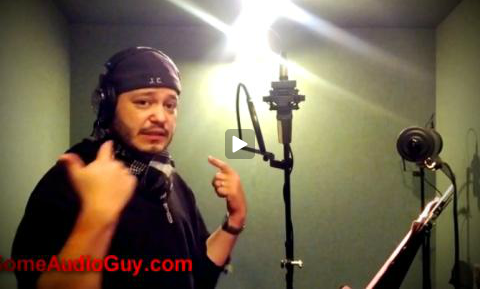 My wonderful friend and colleague, Juan Carlos Bagnell, runs a fantastic blog called, The Ramblings of Some Audio Guy. On it, he posts his wisdom, tips and musings on the world of voice over and recording technology. Juan’s pithy insights into voice over come from his years working both as a voice over agent and more recently as a booth director for voice over projects at The Voicecaster, a famous casting agency in Los Angeles.
Juan just put up a great video post about proximity effect. For those of you who’ve listened to episode 11 and episode 12 of my podcast, I talked at length about microphone technology as well as microphone pickup patterns. I mentioned the fact that a microphone with a cardiod pickup pattern will produce what’s called a proximity effect, meaning that the closer you get to the microphone, the more low end or bass will be amplified by the microphone.
Well Juan has posted a wonderful video demonstration of this phenomenon in action on his blog. It’s entitled, The Proximity Effect and You! I highly recommend you check it out!
VAM 016 | Can I Pursue a Voice Acting Career from Home?
Welcome to episode 16 of the Voice Acting Mastery podcast with yours truly, Crispin Freeman!
As always, you can listen to the podcast using the player above, or download the mp3 using the link at the bottom of this blog post. The podcast is also available via the iTunes Store online. Just follow this link to view the podcast in iTunes:
http://www.voiceactingmastery.com/podcast
In this episode, I address a question that comes up a lot when people want to talk to me about voice acting. The conversation usually goes something like this:
“Hey! I’d really like to get in to voice acting, but I don’t live in a major city. If I buy all the right equipment, can I have a successful voice acting career recording myself from home?”
This is a complicated question and so the answer takes some explanation. Basically there are some types of voice acting you can do from home, and some that you cannot. They basically break down into two types:
- Narration-Style Voice Over
- Collaborative-Style Voice Over
Narration-Style Voice Acting is the kind of work that only requires one voice, like industrial narration, audiobooks, promos and telephone trees (those automated menus you have to slog through when you call a large company for assistance). Rarely is more than one voice recorded for that type of work, so it is possible to do that kind of work from home.
Collaborative-Style Voice Acting includes animation, video games, anime and ADR or Looping. This kind of voice acting cannot be done from home. It requires many actors to come together to create a finished product. Therefore, every actor must be recorded on the same equipment, in the same recording environment with the exact same audio settings in order for the production to sound consistent.
Also, it turns out that even when a voice over job could be done from a home studio, it often isn’t. Producers have good reasons for wanting to use professional studios. I outline their reasons in the podcast. I also discuss what it takes to run a voice over business from home if that’s what you decide to do. But if what you’d like to do is collaborate on animation, games, anime or any other storytelling, the bottom line is you’re going to have to be in a city where that kind of work is done.
Thanks for listening!
Download Voice Acting Mastery Episode #16 Here (MP3)
What Do VO Agents Listen For In A Demo?
 One of my listeners, Jaden, was generous enough to share a link with me to a fantastic article on Backstage.com! It’s called:
Ask an Agent: What Do You Listen for in an Audio Reel?
There are some wonderful agents represented in this article including:
- Cathey Lizzio from CESD
- Stephanie Blume from Imperium-7
- Cynthia McLean from Sutton, Barth & Vennari
- John Erlendson from JE Talent
Each one of the agents explains what they’re listening for when they receive demos from prospective voice talent. Remember, these are the people who have to decide whether or not they’d like to represent someone based almost completely on 60 seconds or less of hearing their voice acting. Each one of them approaches demo submissions differently.
However, there is one similar pattern that emerges from all of them:
They all want to hear solid acting.
Acting ability is the key to an animation performer’s success in traditional animation and gaming, now more than ever before. – Cathey Lizzio
When I cast on animation projects, I look for acting ability, comedic/dramatic timing, and an interesting vocal quality. – Stephanie Blume
Overall, we expect competitive talent to display in an audio reel strong acting, comedic timing, a wide range of vocal and performance ability, and the ability to make a character walk off the page into life. – Cynthia McLean
Like anything else, we listen for acting. – John Erlendson
Developing your acting skills is the single most effective thing you can do to elevate your chances of succeeding in voice acting. It’s more important than vocal range, your age, or your recording equipment. You must be able to act believably and competitively in order to be considered to play characters. This is something I stress extensively in my podcast, especially in Episode 10: How to Practice Voice Acting Anywhere and in my special report The Top 5 Mistakes to Avoid in Voice Acting. You should check them out!
Hopefully this article gives you some insight into the minds of agents. I certainly found it enlightening! Best of luck to you in your voice acting endeavors!